Technical SEO Checklist for 2026

⚡ Quick Answer
A complete technical SEO checklist covering crawlability, indexing, structured data, and performance.
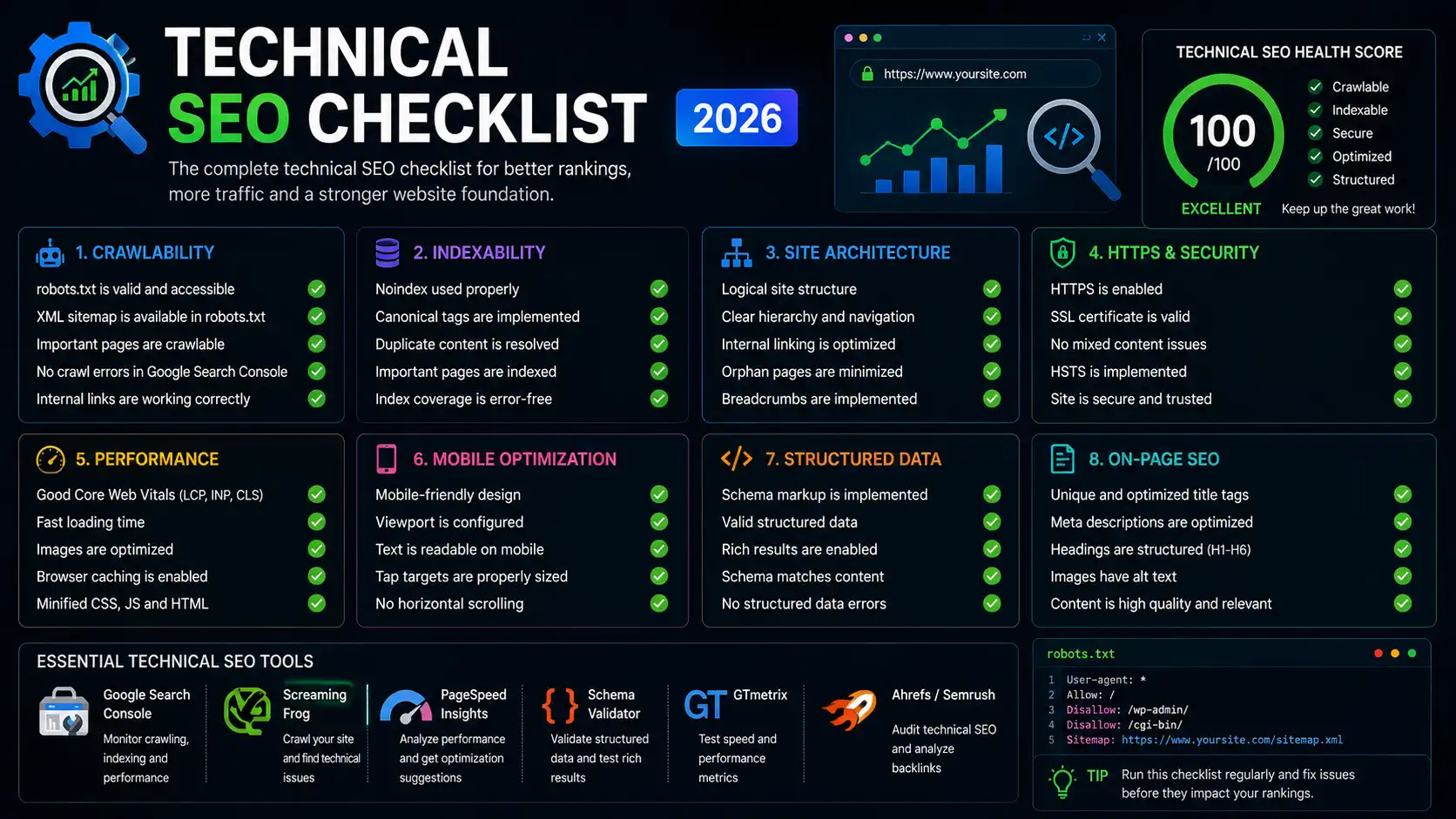
Technical SEO Checklist for 2026: Everything You Need to Know
Technical SEO is the invisible foundation that makes everything else work. You can write the best content in the world, but if search engines cannot crawl, index, and render your pages properly, nobody will find it. This checklist covers every technical element that matters in 2026.
Crawlability: Can Google Find Your Pages?
Submit an XML sitemap through Google Search Console. Ensure robots.txt does not block important pages or resources. Use internal links to connect all important pages within three clicks of the homepage. Check the Coverage report in Search Console for crawl errors and fix them promptly. A well-structured internal linking architecture ensures Google discovers every important page on your site.
Indexing: Does Google Store Your Pages?
Being crawled does not guarantee being indexed. Use the URL Inspection tool to verify important pages are indexed. Ensure canonical tags point to the correct version of each page. Avoid duplicate content across multiple URLs. Remove noindex tags from pages you want indexed and add them to pages you do not want appearing in search results.
Site Architecture and Internal Linking
Use a clear hierarchy: homepage, category pages, subcategory pages, individual pages. Every important page should be reachable within three clicks. Use descriptive anchor text for internal links. Implement breadcrumb navigation with BreadcrumbList schema for additional structure signals that help both users and search engines.
Mobile Optimization
Google uses mobile-first indexing. Your site must be fully responsive with no mobile usability errors. Text must be readable without zooming, buttons must be tappable with sufficient spacing, and no content should be hidden behind interstitials on mobile devices.
Structured Data Implementation
Implement Article schema for blog posts, Product schema for e-commerce, FAQ schema for Q&A sections, and Organization schema for your business entity. Use JSON-LD format. Validate with Rich Results Test before deploying. Structured data helps Google understand your content and can trigger enhanced SERP features.
HTTPS and Security
HTTPS is a confirmed ranking signal. Ensure all pages load over HTTPS with no mixed content warnings. Redirect all HTTP URLs to HTTPS. Keep your SSL certificate valid. Implement security headers like Content-Security-Policy and Strict-Transport-Security for additional protection.
Performance Optimization
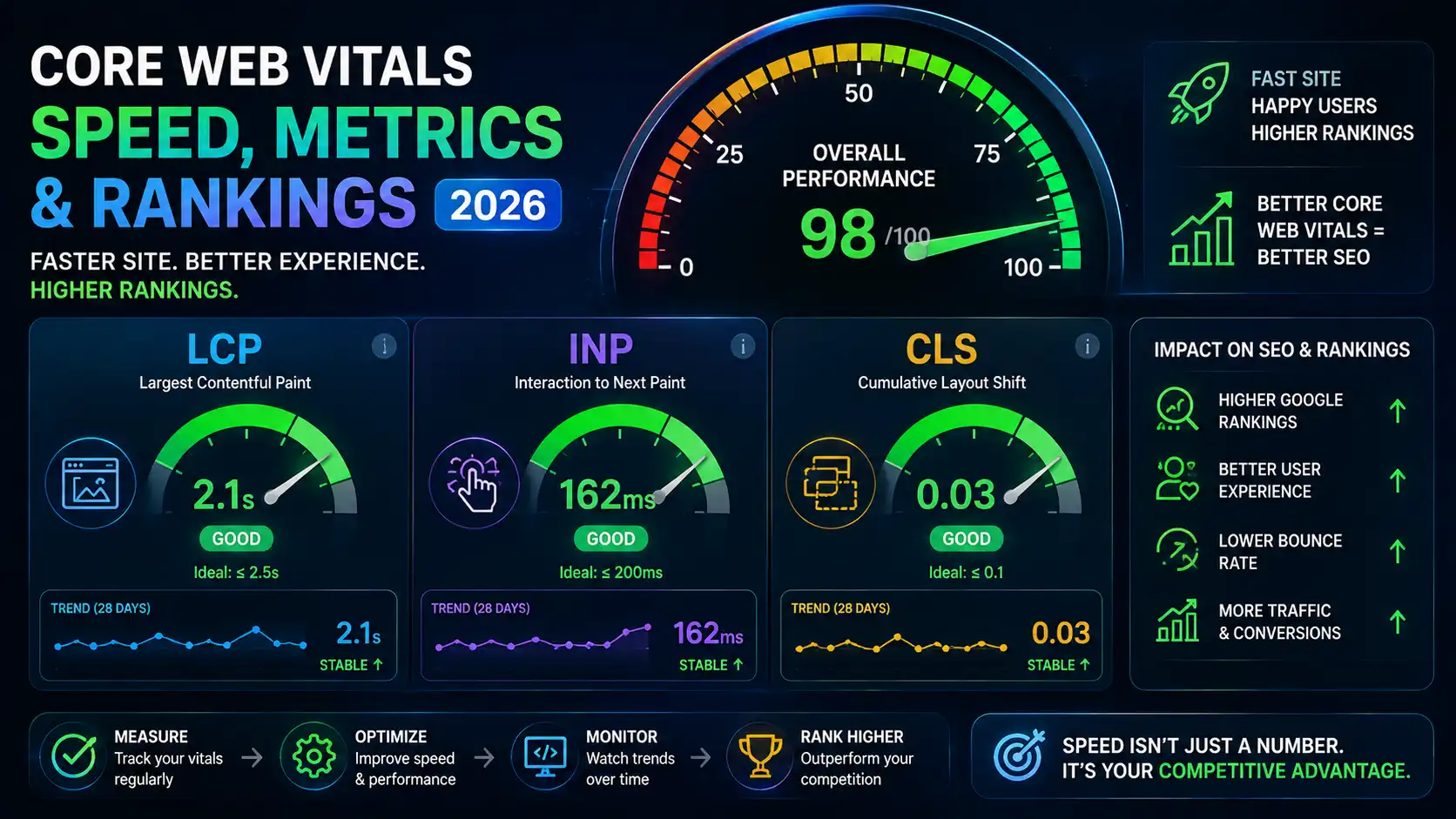
Optimize for LCP under 2.5 seconds, INP under 200ms, and CLS under 0.1. Compress images, defer non-critical JavaScript, use browser caching, and implement a CDN. Monitor field data in Search Console and lab data in PageSpeed Insights continuously.
International SEO
If your site targets multiple countries or languages, implement hreflang tags correctly. Each language version should have a self-referencing hreflang tag and reference all other versions. Use consistent URL structures for language versions.
Run this checklist quarterly. Technical SEO is not a one-time setup. Site changes, CMS updates, and new content can introduce issues at any time.
Frequently Asked Questions
How often should I audit my technical SEO?
At minimum quarterly, or after any major site change like a redesign or CMS update.
What is the most common technical SEO mistake?
Blocking important pages in robots.txt or accidentally adding noindex tags.