
Entity SEO Mastery: Building Semantic Authority for AI-Driven Search in 2026
By Edson Santos • Updated: November 2025
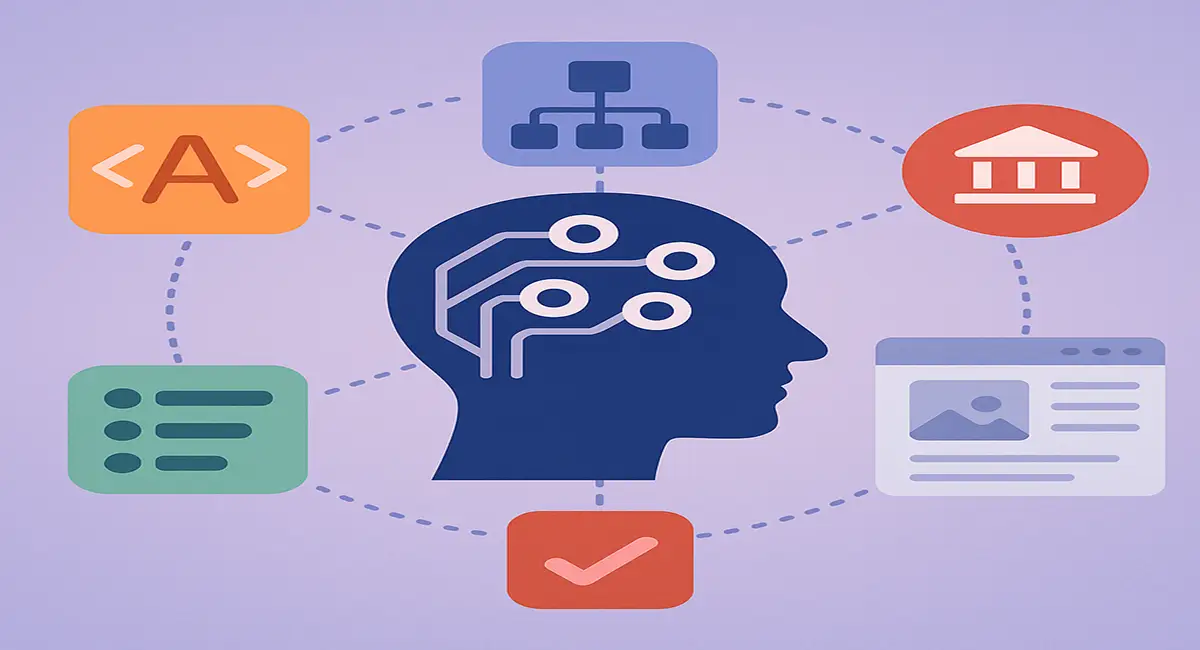
The evolution from keyword-based SEO to entity-driven optimization represents one of the most significant paradigm shifts in digital marketing history. Traditional SEO operated on a lexical model—search engines analyzed text strings, counted occurrences, and matched user queries to document terms. Today's AI-driven search ecosystems operate on a semantic model—they understand meaning, context, and relationships between concepts. Entity SEO represents the strategic bridge between these two worlds, enabling content creators to structure information in ways that artificial intelligence systems can comprehend, categorize, and prioritize.
This transformation goes beyond technical optimization; it represents a fundamental change in how we conceptualize content value. Where traditional SEO asked "What keywords should we target?", Entity SEO asks "What concepts do we represent, and how do they connect to the broader knowledge ecosystem?" This shift from isolated keyword targeting to interconnected semantic understanding aligns perfectly with how modern AI systems like Google's BERT, MUM, and Gemini interpret and organize information at scale.
🧠 Core Insight: Entity SEO isn't about abandoning keywords—it's about contextualizing them within semantic frameworks that AI systems understand. The most successful content strategies now operate at the intersection of human-readable quality and machine-interpretable structure.
Understanding Entities: Beyond Keywords to Concepts
In computational linguistics and AI, an entity is any distinct, identifiable concept that exists independently of language variations. Entities can be concrete (people, organizations, locations, products) or abstract (ideas, theories, processes, emotions). What distinguishes entities from keywords is their unique identity within knowledge systems—each entity has specific attributes, relationships, and contextual associations that define its meaning.
Entity Characteristics
- Unique Identity: Each entity has a distinct identifier within knowledge graphs
- Attribute-Rich: Entities possess defined properties and characteristics
- Relationship-Based: Meaning emerges from connections to other entities
- Context-Aware: Entities exist within specific semantic frameworks
- Language-Agnostic: Entities transcend specific word choices or phrasing
Common Entity Types
- People: Authors, experts, public figures, team members
- Organizations: Companies, brands, institutions, associations
- Locations: Cities, countries, landmarks, addresses
- Products: Software, tools, physical goods, services
- Concepts: Theories, methodologies, frameworks, ideas
- Events: Conferences, launches, historical occurrences
Example: The term "Python" could refer to a programming language, a snake species, or a comedy group. As entities, these are three distinct concepts with different attributes, relationships, and contextual associations. Entity SEO helps search systems disambiguate which "Python" your content references through surrounding semantic signals.
The Knowledge Graph Ecosystem: How Google Understands Entities
Google's Knowledge Graph represents the foundational infrastructure for entity understanding. This massive database contains billions of entities and trillions of relationships between them. When Google processes content, it doesn't just analyze text—it maps entities, identifies their relationships, and contextualizes content within this vast semantic network.
Knowledge Graph Components:
Entity Database
The core repository of identified entities, each with unique identifiers and basic attributes. This includes everything from historical figures to modern brands to abstract concepts.
Relationship Mapping
Structured connections between entities (worksFor, locatedIn, created, influencedBy) that create semantic context and meaning.
Attribute System
Detailed characteristics associated with each entity (birth dates, founding years, locations, associated people, related concepts).
When your content consistently references entities that exist within Google's Knowledge Graph and establishes clear relationships between them, you effectively "plug into" this semantic infrastructure. This makes your content more interpretable, more contextual, and ultimately more valuable to both search algorithms and human users.
Entity SEO Implementation Framework
Implementing Entity SEO requires a systematic approach that spans technical implementation, content strategy, and ongoing optimization. The following framework provides a comprehensive methodology for building semantic authority.
Phase 1: Entity Identification and Mapping
Core Entity Audit
Identify primary entities your brand represents (your organization, key people, flagship products) and secondary entities you regularly reference.
Relationship Analysis
Map how your core entities connect to established entities in your industry (competitors, partners, industry standards, regulatory bodies).
Gap Identification
Identify entity relationships that don't yet exist but should be established based on your expertise and market position.
Phase 2: Technical Implementation
- Structured Data Deployment: Implement JSON-LD schema markup for all entity types (Organization, Person, Product, Article) using standardized vocabulary from schema.org.
- Entity Consistency: Maintain uniform entity references across all digital properties—identical names, consistent attributes, and standardized descriptions.
- Semantic Internal Linking: Create internal links that establish clear relationships between entity-focused content rather than generic navigation.
- Knowledge Graph Alignment: Reference established entities from Wikipedia, Wikidata, and other authoritative sources to create semantic connections.
- Entity-Rich Content Structure: Organize content into topic clusters that revolve around core entities rather than isolated keywords.
Phase 3: Content Strategy Integration
Entity-First Content Development:
- Begin content planning with entity identification rather than keyword research
- Develop content that establishes or strengthens specific entity relationships
- Create definitive entity pages that comprehensively cover core concepts
- Produce content that addresses entity-related questions and relationships
- Incorporate entity context throughout content rather than isolated mentions
Entity SEO for Google Discover and AI Features
Entity SEO becomes particularly critical for platforms like Google Discover, Featured Snippets, and AI-generated answers, where search systems must understand content context without explicit user queries. These AI-driven features rely heavily on entity understanding to determine content relevance and authority.
Discover Optimization:
- Entity-Rich Headlines: Titles that clearly reference recognized entities help Discover categorize content accurately
- Consistent Entity Focus: Content that consistently addresses specific entities builds topical authority signals
- Relationship Demonstration: Content that shows how entities connect provides valuable context for recommendation algorithms
- Authority Establishment: Becoming a recognized source for specific entity information improves Discover eligibility
AI Feature Optimization:
- Structured Entity Data: Schema markup helps AI systems extract and present information accurately
- Clear Entity Definitions: Content that explicitly defines entities and their attributes supports AI understanding
- Relationship Articulation: Clearly explaining how entities connect aids in AI knowledge synthesis
- Comprehensive Coverage: Complete entity information increases likelihood of AI citation and reference
Advanced Entity SEO Techniques
Beyond basic implementation, several advanced techniques can significantly enhance entity understanding and authority signals.
Entity Relationship Building
Strategically create content that establishes new relationships between entities or strengthens existing ones. For example, content that demonstrates how your product (entity) integrates with industry-standard tools (other entities) or how your methodology (entity) builds upon established theories (other entities).
Cross-Platform Entity Consistency
Maintain identical entity representations across your website, social media profiles, business listings, and professional networks. This consistency helps search systems validate entity authenticity and authority.
Entity Gap Analysis
Regularly analyze which entities in your industry lack comprehensive coverage and create definitive content for those gaps. Becoming the primary source for specific entity information establishes significant authority.
Measuring Entity SEO Success
Traditional SEO metrics often fail to capture entity optimization effectiveness. New measurement approaches focus on semantic understanding and authority signals.
Entity Performance Indicators:
- Knowledge Panel Appearances: Frequency with which your entities appear in Google Knowledge Panels
- Entity Rich Results: Inclusion in entity-based SERP features (people also ask, related entities)
- Discover Performance: Traffic and engagement from Discover for entity-focused content
- AI Citation Rates: How frequently AI systems reference your entity information
- Entity Association Strength: Search systems connecting your brand to core industry entities
Authority Measurement Tools:
- Knowledge Graph API: Google's API for exploring entity relationships
- Semantic Analysis Platforms: Tools that analyze entity density and relationship strength
- Structured Data Testing: Validation of entity markup implementation
- Competitive Entity Analysis: Comparing entity authority against competitors
- Entity Search Tracking: Monitoring search performance for entity-focused queries
Future Trends: Entity SEO in the AI Era
As AI systems become increasingly sophisticated, entity understanding will evolve from being a ranking factor to becoming the fundamental framework for all content evaluation. Several trends indicate the direction of this evolution:
Multi-Modal Entity Understanding
AI systems will increasingly understand entities across text, images, audio, and video, requiring comprehensive entity representation across all content formats.
Dynamic Entity Relationships
Entities and their relationships will be understood in real-time context, with temporal factors and current events influencing semantic interpretation.
Cross-Platform Entity Continuity
Entities will be tracked across platforms and devices, creating comprehensive entity journeys rather than isolated interactions.
AI-Generated Entity Content
AI systems will increasingly generate entity-focused content, requiring brands to maintain authoritative entity representations to ensure accurate AI understanding.
💡 Strategic Implementation Insight
Begin your Entity SEO journey by identifying just three to five core entities your brand represents or wants to be associated with. Develop comprehensive content for these entities, implement proper structured data, and consistently reinforce their relationships to established industry entities. This focused approach often yields more significant semantic authority gains than attempting to optimize for dozens of entities simultaneously.
Conclusion: Building Semantic Foundations for Future Success
Entity SEO represents more than a tactical optimization approach—it's a strategic foundation for building sustainable digital authority in an AI-driven world. By structuring content around identifiable concepts and their relationships, brands create semantic infrastructure that both search algorithms and human users can navigate intuitively.
The transition from keyword optimization to entity understanding reflects a broader shift in how information is organized, accessed, and valued online. Brands that embrace this shift early and implement comprehensive entity strategies will be better positioned for success across traditional search, AI-driven features, and emerging content distribution platforms.
Remember that entity development is a long-term investment in semantic authority. The most successful implementations combine technical precision with authentic expertise, creating content ecosystems that both machines can understand and humans can trust. As AI continues to reshape digital information access, these entity-based foundations will become increasingly valuable strategic assets.
Written by Edson Santos • Digital Mind Code • Updated November 2025
← Return to Digital Marketing InsightsDisclaimer: The information provided in this article is for educational and informational purposes only. It does not constitute professional advice, nor does it guarantee results on Google Search, ranking performance, or monetization outcomes. SEO practices evolve frequently, and results may vary depending on niche, competition, content quality, and user behavior. Always conduct your own research and make decisions based on the specific needs of your project or business. Digital Mind Code is not responsible for any actions taken based on the content of this article.