Functional Resume Format: When and How to Use It in 2026

⚡ Quick Answer
The functional resume format is perfect for career changers, employment gaps, and returning workers. Learn when to use it and how to do it right.
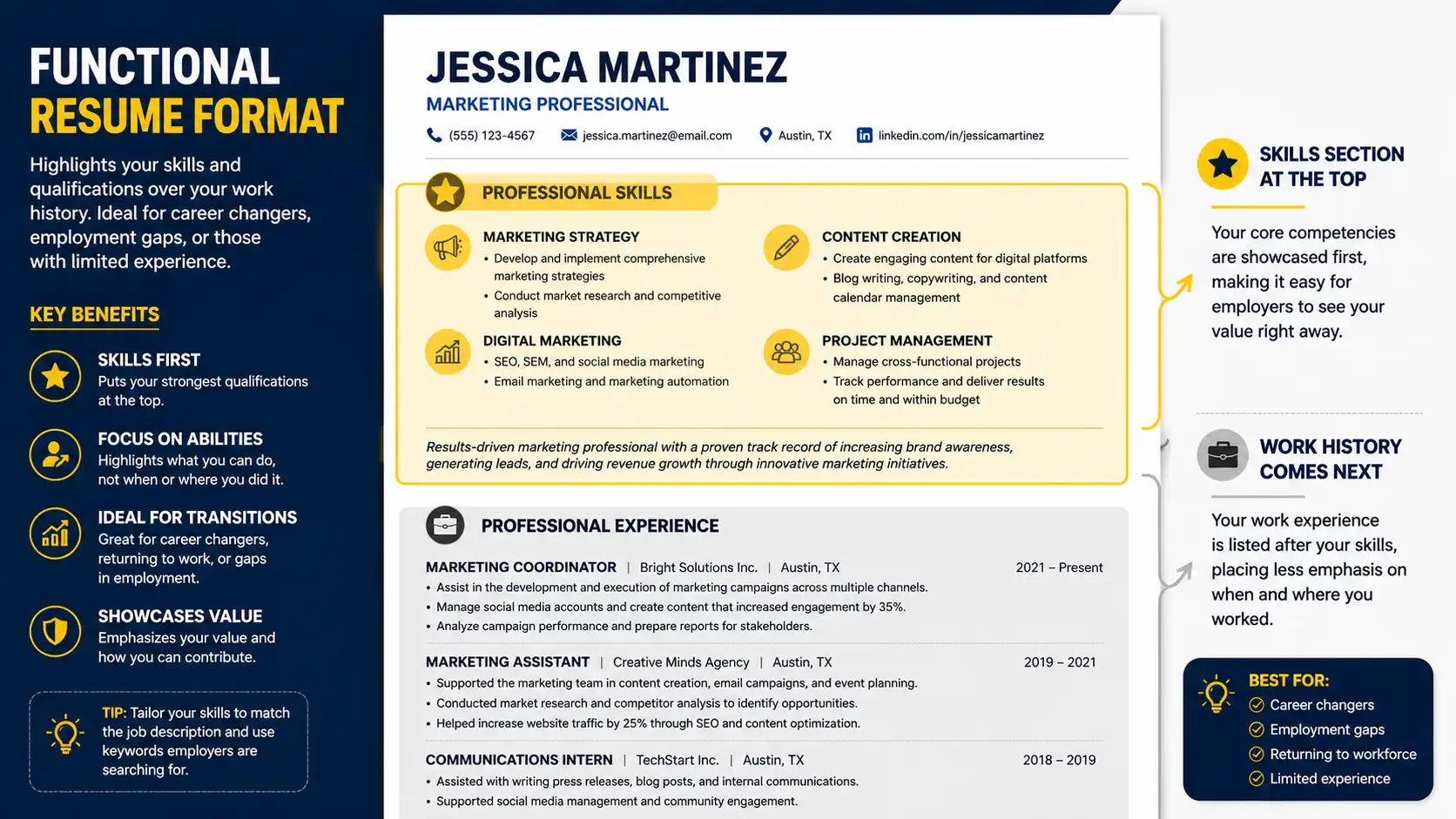
Functional Resume Format: When and How to Use It in 2026
The functional resume format organizes your resume around skills and competencies rather than a timeline of jobs. It is controversial — some recruiters love it, others distrust it — but in specific situations, it is genuinely the best tool available. If you are switching careers, returning to work after a gap, or have a non-linear work history, understanding this format could change your job search results.
What Is a Functional Resume?
A functional resume leads with a strong skills section that groups your abilities into categories — such as Leadership, Project Management, or Customer Relations — with bullet points demonstrating how you applied those skills. Your work history appears below the skills section, often without detailed bullet points. The goal is to shift attention from when you did things to what you can do.
Who Should Use a Functional Resume?
- Career changers who have strong transferable skills but limited direct experience in the new field
- Candidates with employment gaps of a year or more that they want to de-emphasize
- Returning workers who have been out of the workforce for family, health, or personal reasons
- Military veterans transitioning to civilian careers with skills that need reframing
- Freelancers or consultants with many short-term engagements rather than long-term employment
The Risk: ATS Compatibility
Here is the honest truth about functional resumes: many ATS systems struggle to parse them correctly because they expect a chronological structure. If your resume is being submitted through an online portal, a functional format can actually hurt your chances. To mitigate this, always include a complete work history section — even a brief one — so the ATS can extract dates and employers. Consider a combination format instead, which preserves skills emphasis while maintaining ATS-friendly structure.
How to Structure a Functional Resume
- Header: Name, contact info, LinkedIn
- Resume Summary/Objective: Focus on skills and goals
- Core Competencies / Skills Section: Grouped by category with supporting bullets
- Work History: Company name, title, dates only — no bullets required
- Education and Certifications
Example Skills Section for a Functional Resume
Project Management
- Led cross-functional teams of 8 to 15 members to deliver software deployments on time and within budget
- Developed project charters, risk registers, and stakeholder communication plans for $2M+ initiatives
Client Relations
- Managed relationships with 40+ enterprise accounts, maintaining 94% annual retention rate
- Conducted quarterly business reviews and resolved escalations within 24 hours
Functional vs Combination Resume
A combination resume blends the functional and chronological formats. It leads with a strong skills section but also includes full work history with bullet points. This is often a better choice than a purely functional resume because it satisfies both ATS requirements and recruiter expectations while still giving skills prominent placement. If you are unsure which to use, the combination format is usually the safer bet.
Warning: Some recruiters view functional resumes with suspicion because they can obscure employment gaps or irrelevant experience. Be prepared to address your work history transparently in interviews.
Frequently Asked Questions
Do recruiters like functional resumes?
Opinions are split. Some appreciate the skills-forward approach. Others are suspicious of it. When in doubt, use a combination format that includes both skills and chronological work history.
Can I use a functional resume if I have an employment gap?
Yes. A functional resume de-emphasizes dates and timelines. However, always be honest about your work history — gaps discovered in an interview that were hidden on a resume damage trust immediately.