Chronological Resume Format: The Complete Guide for 2026

⚡ Quick Answer
The chronological resume is the most widely used format in the US. Learn when to use it, how to structure it, and see real examples that get interviews.
Chronological Resume Format: The Complete Guide for 2026
The chronological resume is the most widely recognized resume format in the United States — and for good reason. It is clear, familiar to recruiters, ATS-friendly, and puts your career progression front and center. If you have a consistent work history in the field you are applying to, this format is almost certainly your best option. Here is everything you need to know to do it right.
What Is a Chronological Resume?
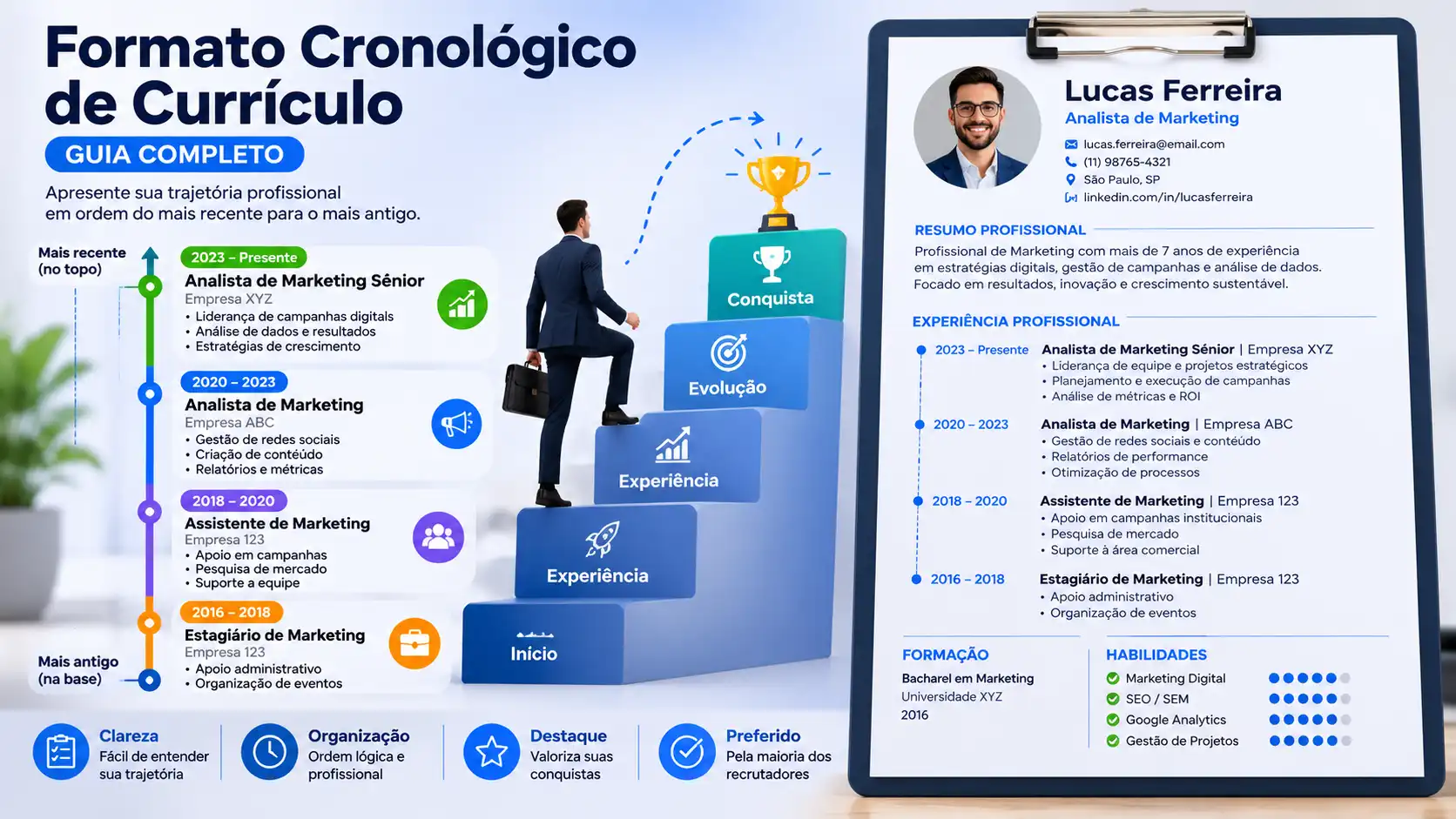
A chronological resume (more precisely, a reverse-chronological resume) lists your work experience starting with your most recent position and working backward in time. Each job entry includes your title, employer, dates of employment, and bullet points describing your accomplishments. This format gives hiring managers a clear timeline of your career development and makes it easy to see where you are now and how you got there.
When to Use the Chronological Format
Use this format when you have at least 1 to 2 years of relevant work experience in the same or related field, when your career has progressed steadily without major gaps, when you are applying to a traditional or corporate employer, and when the job description aligns well with your most recent roles. This is the format recruiters and ATS systems are most familiar with, making it the safest default choice for most job seekers.
When to Choose a Different Format
The chronological format may not serve you well if you have significant employment gaps that would be immediately visible, if you are making a complete career change with unrelated past experience, or if you are returning to the workforce after several years away. In these cases, a functional or combination format might present your background more favorably.
How to Structure a Chronological Resume
- Header: Name, phone, email, city/state, LinkedIn
- Resume Summary: 2 to 4 sentences highlighting your value
- Work Experience: Most recent job first, going back in time
- Education: Highest degree first, institution, graduation year
- Skills: Relevant hard and soft skills in a clean list
- Optional: Certifications, Awards, Volunteer Work, Publications
How to Write Bullet Points for Work Experience
Each job entry should have 3 to 5 bullet points. Start every bullet with a strong action verb. Quantify achievements wherever possible. Use the formula: Action verb + what you did + the result. Example: "Reduced customer churn by 18% by implementing a proactive follow-up program that contacted at-risk accounts before cancellation." Compare that to "Responsible for customer retention" — the first version is specific and impressive; the second is forgettable.
ATS Compatibility of the Chronological Format
The chronological resume is the most ATS-compatible format available. Applicant tracking systems are built to read this structure — they expect to find contact information at the top, followed by work experience in reverse order. Avoid multi-column layouts, graphics, and tables even in a chronological resume, as these can scramble the content when parsed by ATS software. Use a single-column layout with clear section headings.
Example Work Experience Entry
Senior Account Manager | Horizon Sales Group | Chicago, IL
March 2021 – Present
- Grew territory revenue from $1.2M to $2.8M in 24 months by expanding key account relationships and winning 14 new enterprise clients
- Maintained 98% client retention rate over 3-year tenure through proactive account reviews and customized service plans
- Mentored 4 junior account managers, two of whom earned promotion within 18 months
Tip: Never go back more than 10 to 15 years in work experience. Older positions can be listed briefly or omitted entirely. Hiring managers focus on recent and relevant — not ancient history.
Frequently Asked Questions
Is the chronological resume the best format?
For most candidates with consistent work history, yes. It is the most widely accepted, easiest to read, and most compatible with ATS systems used by US employers.
How far back should I go on a chronological resume?
10 to 15 years is the general guideline. For senior professionals, you can briefly list older roles without bullet points to show career trajectory without taking up too much space.